
Grateful for Everything
George & Terri Cecere
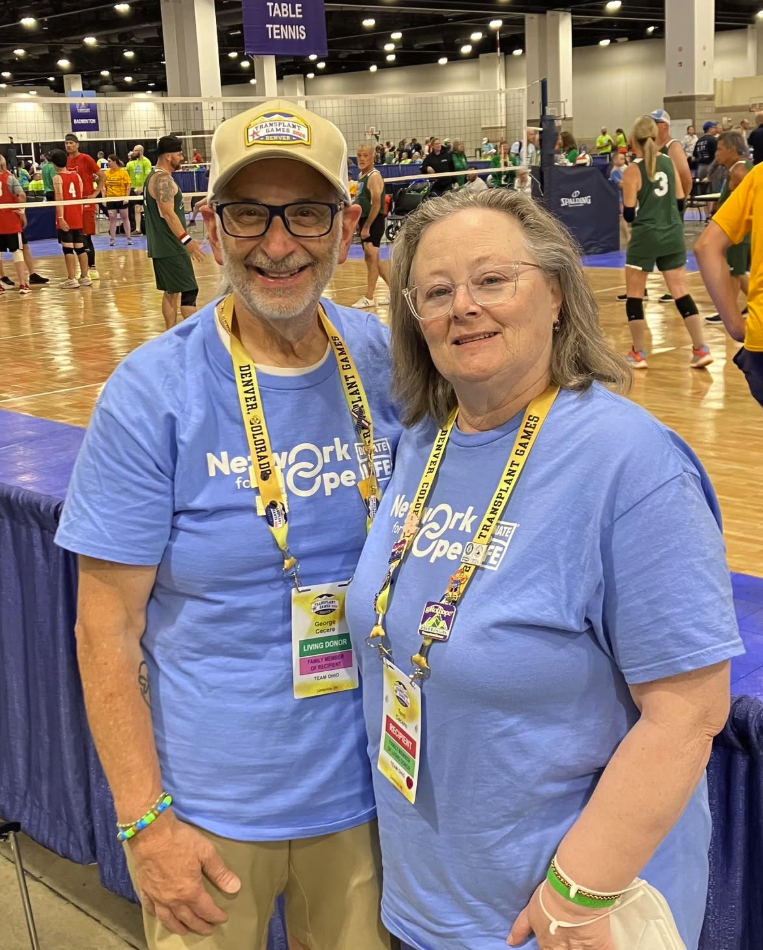
George and Terri Cecere have been married for nearly five decades. They’ve built a life together, raised a family, and been there for each other through some difficult seasons.
One of the hardest came in 2022, when Terri’s heart began to fail. Terri had been living with cardiomyopathy for years. She had first been diagnosed after receiving chemotherapy for non-Hodgkin’s lymphoma when she was 16. For a long time, her condition was manageable. She took her medications, had an implanted defibrillator, and was still able to do the things she wanted to do.
By the summer of 2022, Terri’s health had taken a turn for the worse; she had reached end-stage heart failure. She was referred to The Christ Hospital in Cincinnati, where her doctors began discussing what came next: an LVAD or a heart transplant. The Christ Hospital had never performed a heart transplant before. Terri remembers asking her doctor where she would have to go if she needed a transplant. He said, ‘Well, we’re applying to be a transplant center,’ she remembers. A few days later, the hospital received approval to begin its heart transplant program, and Terri later became its first heart transplant recipient.
Learning a New Routine
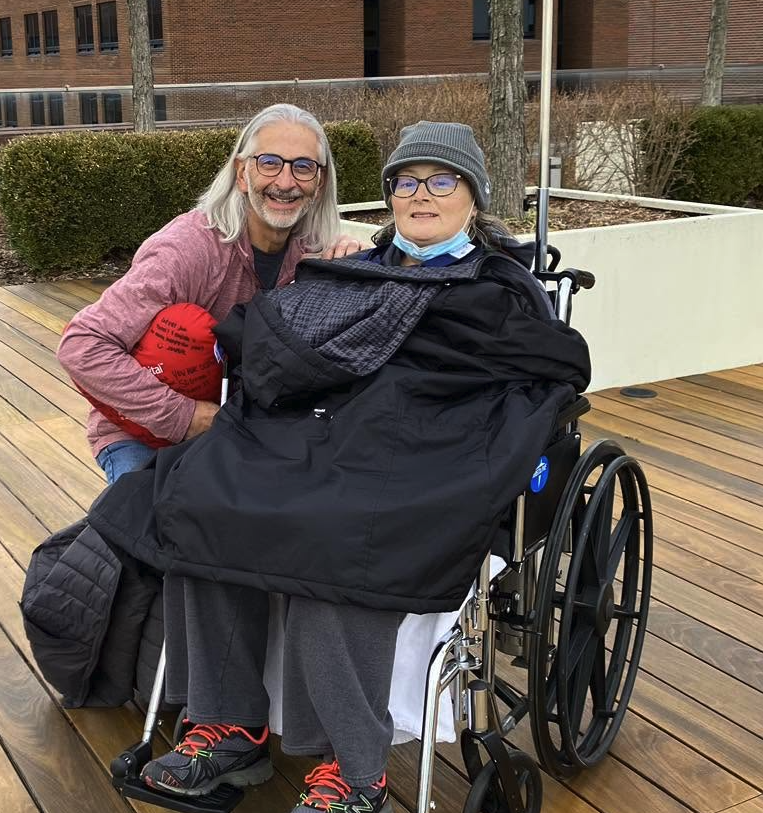
The transplant gave Terri a new heart, but getting back to everyday life took time. When she came home, George became her caregiver. He helped her with things that had once been simple: getting dressed, eating, moving around the house, and keeping track of everything that came with recovering from a transplant.
“I thought I was tough. I could do this on my own,” George says. “And I quickly realized how wrong I was.”
The experience gave George a new understanding of what caregivers go through. There were plenty of resources for transplant recipients, but George couldn’t find much specifically for the caregivers supporting them.
So he started looking for other caregivers. What began as a small group connected to The Christ Hospital has now grown into a community of more than 250 caregivers from across the country and even internationally. They meet virtually every week, sometimes twice a week, and have honest conversations about the challenges and joys of being caregivers.
“They’re trying to be positive and strong for their loved one,” Terri says. “And they’re really carrying a burden that, in the midst of all of it, the recipient isn’t always aware of.”
George wanted people to have somewhere to say the things they might not feel comfortable saying anywhere else. Sometimes, he says, someone just needs to hear, “You’re not the only one.”
Finding a Way to Give Back
After Terri’s transplant, the couple began looking for ways to give back. They connected with their local organ procurement organizations, became ambassadors, attended events, and started sharing their story with other people. Their involvement eventually led them to the Chris Klug Foundation and Student Organ Donation Advocates, where they’ve continued talking about the importance of organ donation. For them, it isn’t about telling a perfect story. It’s about reminding people that transplantation happens to real people and real families.
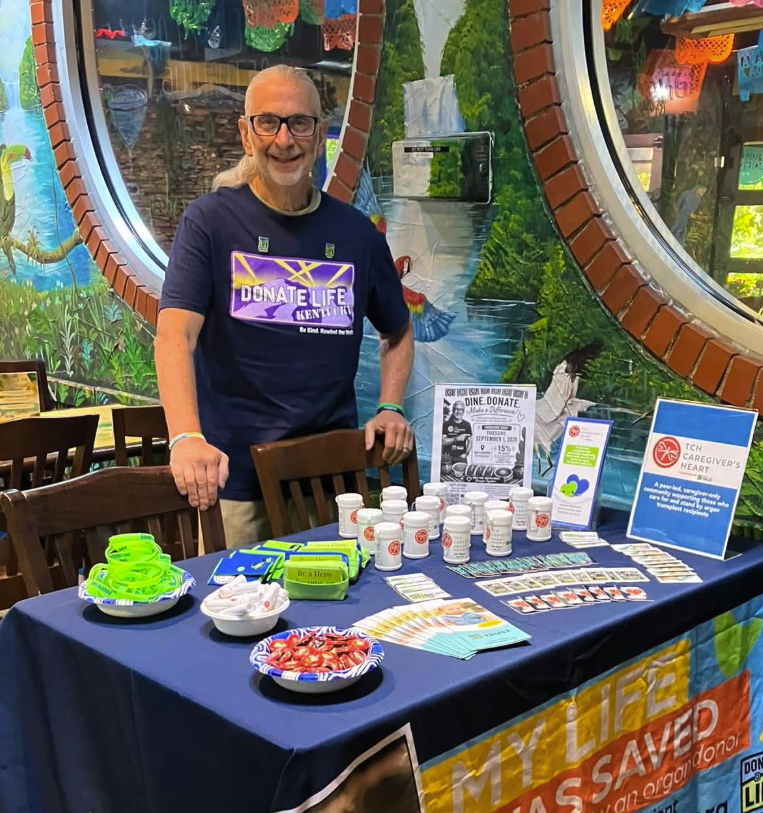
For Terri, it was important to recognize the person who had given her the chance to keep living. George says sharing their story has become one of the most meaningful things they can do.
"We’ve discovered and truly believe that sharing our story is one of the best ways we can honor the donor and the donor family,” he says.
On August 5th, 2026, George and Terri received a call from their local OPO. The call brought their first letter from Terri’s donor’s mother. Their first contact with the donor family, nearly four years after Terri’s transplant.
They hope to one day meet the donor family in person, so they can share a special moment together: allowing the donor family to hear their loved one’s heartbeat again.
Then George Had an Idea
A few years after Terri’s transplant, George started thinking about donation differently. He had seen a story about a Kentucky family with multiple people waiting for kidney transplants, and the story stayed with him. Eventually, he turned to Terri and said, “I think maybe I ought to be a living kidney donor.”
Terri didn’t need much convincing."My God, that would be great. You should do it,” she told him.
George began the evaluation process in August 2025. He knew that, at 67, he would have to go through additional testing, but he was willing to see what happened. The process took about four months. On November 6th, the third anniversary of Terri’s heart transplant, George found out that he had been approved. A few weeks later, on December 2, he donated his kidney.
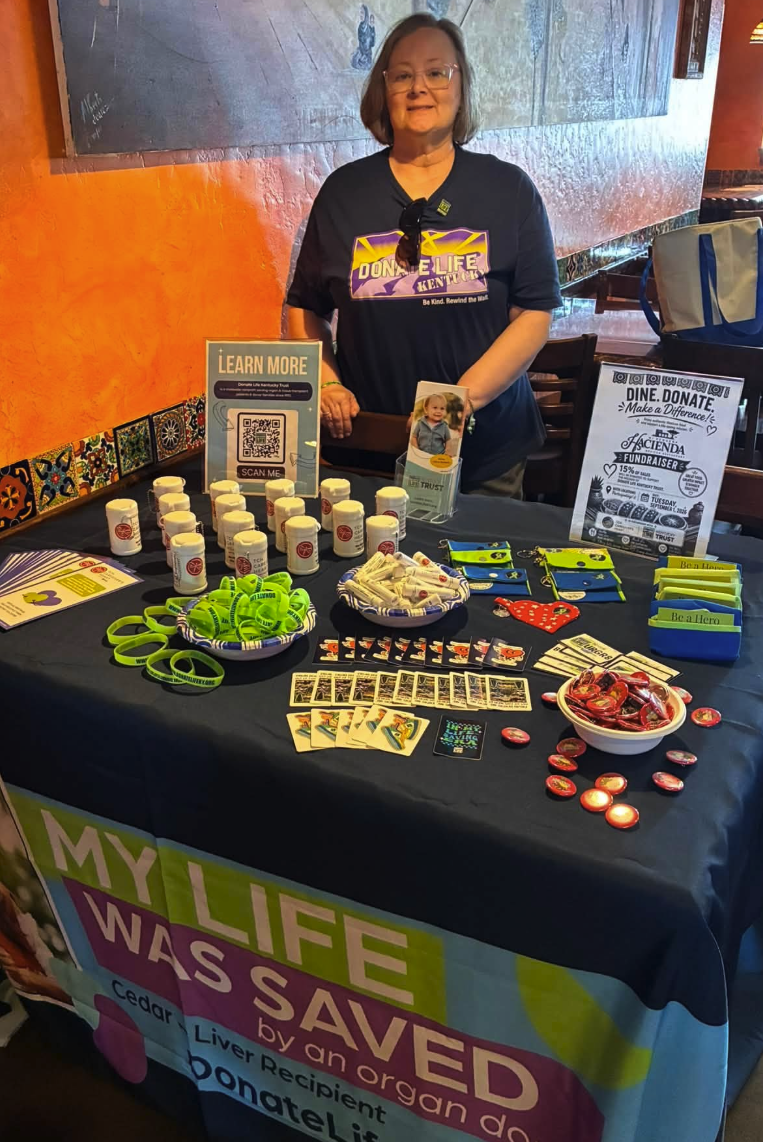
He initially looked through profiles of people waiting for a kidney, hoping he might find someone he could help. But he couldn’t choose. “They were all so deserving,” George says. “I really couldn’t choose one.” So he decided to donate altruistically and let the medical team determine who would receive his kidney. The surgery went well. The recovery wasn’t always comfortable, but he says that was never really the point.
"All of that was overshadowed by the fact that I knew somebody had received a kidney.”
Seeing the Difference
Eventually, George and Terri met the woman who received his kidney. She had spent five years on dialysis, going five days a week. Now, she’s swimming again and going on a cruise. “It’s just so great to see her being able to go on and live her life,” George says.
George had already seen what a transplant did for Terri. Now he was seeing what his own donation could do for someone else.
Grateful for Everything
George and Terri don’t pretend that life after transplant is completely easy; there are medications, appointments, lab work, and lots of uncertainty. Some days, they also have to stop and remember how much has changed.
They don’t know exactly what the next few years will bring. But after everything they’ve been through, George and Terri don’t take much for granted. They’re grateful for the people who gave Terri a second chance, for each other, and for the opportunity to give back.