
CKF Ambassador - JennyRose Corritore’s Journey as a Living Kidney Donor
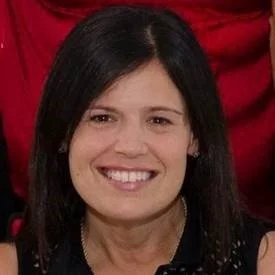
JennyRose has always believed in doing what you can, when you can. She describes herself as the person who gives blood every eight weeks “because you can.” Since she is healthy and able, she has felt a responsibility to show up for others. After watching friends and family navigate cancer diagnoses and other serious health challenges, that instinct to help only grew. So when she learned more about living organ donation, specifically liver donation, she felt compelled to become an altruistic donor. “The reason that I decided to become a living liver donor was because I can,” she says.
Why Liver?
Many people are familiar with living kidney donation. Jenny is often asked why she didn’t choose that route. For her, the answer was clear. With kidney failure, dialysis can help sustain someone while they wait for a transplant. It’s not ideal or easy, she acknowledges, but it exists. With liver failure, there is no equivalent long-term alternative.
“If you need a liver and you’re not getting a transplant, there is no other path,” she explains. “You can’t live without your liver.”
While learning about the living donation process, she learned that the liver regenerates itself. The idea that her body could recover and regrow what was donated felt like the perfect match for her. Jenny chose to donate altruistically. She did not want to direct her gift to someone she knew, nor did she need to know the recipient’s story in advance. She simply asked to be matched with the person at the top of the list who was the best fit for her liver.
“I just wanted the top of list, best match. I felt that I was lucky enough to be able to donate, and I wanted it to go to the person most in need.”
A Supportive Community
Jenny underwent her transplant evaluation and surgery at NYU in New York City. From the beginning, she says, the transplant team was transparent about every step—what surgery would entail, what recovery would look like, and what she would need in place before moving forward. Two things, she says, are essential are a strong support system and workplace support. Jenny made sure the people closest to her were fully comfortable with her decision. She intentionally kept her circle small, sharing the news only with those who would be part of her recovery team. She was also fortunate to work for a company that responded to her decision with flexibility and support. She was told to plan for up to six weeks away from work, and her employer was fully prepared to support that timeline. Having both personal and professional backing gave her peace of mind going into surgery.
The Big Day
Jenny’s surgery took place on Election Day in 2024. The timing, she says, felt oddly fitting. With so much happening in the world, she appreciated being able to focus solely on the surgery and recovery. The procedure lasted around five to six hours. In her case, surgeons removed the left lobe of her liver, rather than the right lobe, based on what was medically best for her.
She remembers waking up to her surgeon at her bedside, reassuring her that everything had gone smoothly. Her pain was carefully managed, including epidurals during the first couple of days. Jenny was hospitalized from Tuesday through Saturday morning. By the time she was discharged, she had met every milestone: her pain was manageable, she was tolerating a normal diet, and her labs looked excellent.
Recovery: Discomfort, Not Pain
Because of her anatomy, Jenny was not eligible for a fully laparoscopic procedure. Instead, she underwent a partial laparoscopic surgery, which required a larger incision. For her, the most challenging part of recovery was not pain, but discomfort, particularly related to the incision. As a self-described belly sleeper, she had to adjust to sleeping on her back or side. Getting up and down required care because the incision involved her core muscles.
“I want to distinguish—it wasn’t pain. It was discomfort.”
Her primary restrictions were straightforward: no driving and no lifting more than five to ten pounds for six weeks, largely to prevent a hernia. As a runner and regular gym-goer, listening to those instructions was important. By two to three weeks post-op, she was trending well. At six weeks, she was cleared to drive again, her incision had healed beautifully, and she was off all medications. In fact, the only medication she recalls taking at home was a fiber supplement to avoid straining during recovery.
She began signing into work about a week to a week and a half after surgery—not because she had to, but because it felt like part of returning to normal. With the flexibility to rest when needed, she was back full-time (working from home) by the two-week mark.
“I felt good enough and well enough to be full on back at two weeks.”
Today, more than a year later, she reports zero residual issues beyond a small scar. Less than a year after surgery, she ran the Marine Corps Marathon and felt great doing it.
“I laughed and asked my doctors if I could do it again,” she says. (They laughed, too—and told her no).
A Letter From Her Recipient
Jenny’s recipient was a woman with a daughter. At her three-month follow-up appointment, Jenny received a letter. In it, the recipient shared her gratitude and the joy of knowing she would be able to watch her daughter grow up and experience life’s milestones.
For Jenny, the letter carried profound meaning because she lost her own mother at nine years old.
“To know that this went to a woman who would see those milestones that my mother didn’t get to see from me was very, very impactful.”
She checks in with the transplant team every few months and continues to hear that her recipient is thriving. On the first anniversary of the transplant, Jenny wrote back, expressing that the best news she could ever receive was knowing the recipient was recovering and present for her family.
Under the Radar—But Not Silent
Jenny has wrestled with what it means to be an altruistic donor. She prefers to go “under the radar.” But she has also come to realize that sharing her story carries responsibility. When people hear she donated a liver, many respond with surprise: “I didn’t even know you could do that.” That realization has shifted something for her. If more people understood that living liver donation is possible, and that the liver regenerates, would more people step forward?
“I truly feel that I want people to know and be educated on it,” she says. “Because what that might just do is bring more donations.”
Her journey, she emphasizes, was seamless; she felt prepared, supported, and well cared for. She returned to running, working, and living fully, with no limitations. For Jenny, the decision was simple; she could help save a life, so she did. And now she is choosing to give something more, her voice, so that others might realize they can do the same.